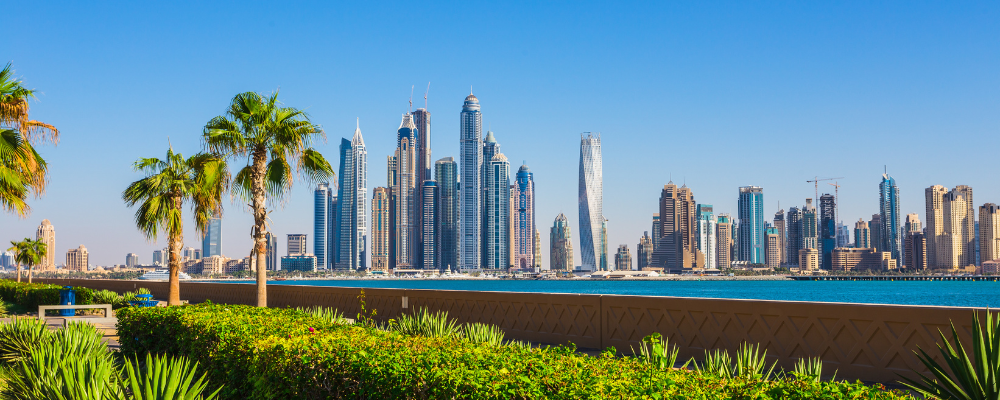
Why the Middle East is becoming a destination to build a long-term technology career
For years, many professionals viewed the Gulf as a place to gain international experience before moving on elsewhere. Today, that perception is changing.
The UAE, Saudi Arabia and the wider region, governments and organisations are investing heavily in advanced technology, engineering, manufacturing and research capability. Rather than relying solely on imported expertise and technology, the focus has shifted towards building local industries, developing sovereign capability and creating sustainable, knowledge-based economies.
As a result, the Gulf is becoming more than just a destination for work. It is becoming a place where technology professionals can build long-term, meaningful careers.
Localisation is creating long-term opportunities
Across sectors including defence, critical infrastructure, healthcare, transport, manufacturing and advanced technology, organisations are establishing engineering centres, software development teams, manufacturing facilities and research capabilities within the Middle East.
Many international organisations have local joint ventures, while governments continue to invest in national technology strategies designed to encourage innovation, skills development and long-term industrial growth.
The result is a rapidly expanding ecosystem where technology professionals can contribute to products, platforms and programmes that are designed, developed and supported locally.
For those looking to make a lasting impact, the opportunity is increasingly about helping build industries rather than simply supporting them.
Building Sovereignty, Industry and Real Careers
The Middle East’s technology investment is about far more than adopting the latest innovations. It is about developing the capability to design, build, operate and sustain critical technologies locally.
The region already has a well-established community of software engineers, AI specialists, cyber security professionals, systems engineers and programme leaders who have built successful careers here over many years. Many have played a significant role in shaping the technology ecosystem that exists today. However, there is still plenty of room for new talent to enter the market.
As investment continues to grow, these experienced professionals are increasingly being joined by international experts who bring specialist knowledge from other global markets. Together, they are creating teams that combine local insight with international best practice.
For technology professionals, that creates something unique: the ability to contribute not only to individual projects but to the development of entirely new capabilities, organisations and industries.
That level of influence is difficult to find in more mature markets and is one of the reasons many professionals are choosing to build long-term careers in the region.
Technology Adoption Is Accelerating
Another factor driving growth is the speed at which organisations are embracing new technologies.
Artificial intelligence, autonomous systems, cloud platforms, digital engineering, cyber security and advanced manufacturing are no longer future ambitions. Across both the public and private sectors, they are becoming part of everyday delivery.
This willingness to adopt and invest in emerging technologies continues to attract both organisations and talent from around the world.
As industries continue to mature, professionals have increasing opportunities to work on complex, technically challenging programmes while building long-term careers within the region.
Importantly, this is not simply about transferring knowledge into the Middle East. It is about creating industries that will continue to evolve, innovate and compete globally for decades to come.
Building a Career, Not Just Taking a Job
For candidates considering a move to Dubai or the wider Middle East, the opportunity is increasingly about career development rather than a short overseas assignment.
Professionals have the chance to work alongside experienced international teams while helping shape organisations that are investing for the future. As industries expand, so do the opportunities for progression into technical leadership, programme management and executive roles.
Many professionals are also attracted by the ability to work on nationally significant programmes and emerging technologies while remaining within one of the world’s fastest-growing technology markets.
The result is a career proposition that combines technical challenge, professional growth and long-term opportunity.
The Bigger Picture
The Middle East is no longer simply a market that adopts technology developed elsewhere.
It is becoming a place where technology is designed, engineered, manufactured and supported locally.
That transformation is creating opportunities for both established professionals and those looking to take the next step in their careers.
Whether your expertise lies in artificial intelligence, cyber security, software engineering, cloud technologies, autonomous systems, data, advanced manufacturing or critical infrastructure, there has never been a more interesting time to consider what a career here could look like.
The organisations investing here are building for the long term.
About the author
As Director of Aspire Technology and Co-Founder of Aspire Recruitment Group, Nick Drzymalski, has spent more than 20 years building recruitment businesses, leading high-performing teams, and supporting organisations across Critical Infrastructure sectors.
Since relocating to Dubai in 2009, Nick has helped shape Aspire’s growth and reputation as a trusted talent partner in complex, fast-moving markets. With a leadership style built on long-term relationships, industry expertise, and a deep understanding of global hiring challenges, he continues to help organisations build resilient, future-ready workforces.