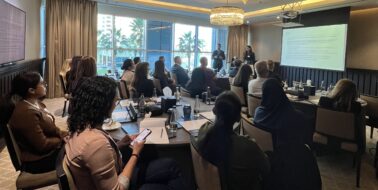
Talent, AI & building what’s next in healthcare
At WHX Dubai 2026, I had the opportunity to spend several days in conversation with healthcare and health tech leaders from across the region, founders, operators, investors and clinicians who are not just talking about transformation but actively building it.
The energy was purposeful. The tone was pragmatic. And the central question underpinning many discussions was clear:
How do we build sustainable healthcare capability in a region moving at pace, particularly as AI reshapes the landscape?
Below are some of the themes that stood out most strongly.
AI in Healthcare: The talent retention reality
A recurring topic, almost without exception, was talent retention, particularly across AI and advanced analytics in healthcare.
The reality is simple. Top performers are being approached regularly. In some cases, monthly. Sometimes weekly.
This isn’t just a compensation conversation anymore. Organisations are being forced to think more deeply about what genuinely differentiates them as an employer.
The discussions I had consistently centred around four differentiators:
• Mission clarity – Does the organisation stand for something meaningful in patient care or system transformation?
• Growth & exposure – Are AI specialists building something pioneering, or maintaining legacy systems?
• Leadership quality – Are leaders capable of articulating a long-term vision?
• Environment – Is there psychological safety, agility, and space to innovate?
As AI adoption accelerates, “great” talent increasingly means hybrid capability, professionals who understand clinical environments, regulatory realities, data science, and commercial impact. That blend is rare. And highly mobile.
The organisations best positioned in 2026 are not simply hiring AI engineers, they are building ecosystems that make those individuals want to stay.
From “Filling Roles” to strategic workforce planning
Another consistent theme was hiring strategy going into what many anticipate to be a very busy 2026.
The shift I’m seeing is encouraging. Moving from reactive recruitment, “we need someone now”, toward structured workforce planning that aligns with:
- Delivery roadmaps
- Commercial growth plans
- Long-term capability building
- Digital transformation milestones
Forward-thinking leaders are asking different questions:
- What skills will we need 12–24 months from now?
- Where can we build internally versus hire externally?
- How do we ensure new hires add measurable value, not just capacity?
Healthcare transformation is capital-intensive and highly regulated. Misaligned hiring decisions are expensive. The strongest organisations are treating talent strategy as a core business function, not a support activity.
The growth loop challenge
One particularly interesting theme that surfaced repeatedly was what I call the growth loop challenge.
Many organisations are facing a familiar tension:
- You need to win new business to justify expanding headcount.
- But you need to hire commercial or business development capability to win that new business in the first place.
Left unmanaged, this creates hesitation and stalled growth. The organisations best positioned appear to be those treating growth as a coordinated strategy across commercial, delivery and talent, not isolated decisions made in silos.
They are:
- Aligning hiring plans with revenue targets
- Involving delivery leaders early in commercial conversations
- Building flexible resourcing models
- Treating talent acquisition as a proactive growth lever
That alignment, when done well, creates momentum rather than friction.
Major company announcements and innovations
Here are several organisations that showcased notable innovations and strategic launches during the event:
- Philips brought a suite of AI-powered healthcare innovations to WHX Dubai, highlighting solutions designed to give clinicians more time and patients better care across imaging, monitoring and patient workflow processes.
- GE HealthCare unveiled its AI-enabled precision care portfolio, showcasing over 20 advanced digital and cloud-based solutions aimed at improving diagnostic speed, clinical workflows and overall patient outcomes.
- TERN Group showcased its AI healthcare workforce infrastructure platform, emphasising how technology can support workforce planning and capability development in large health systems.
- ScienceSoft demonstrated multi-agent AI solutions for healthcare contact centre automation, pointing to the wider trend of AI-driven operational technologies in the sector.
- Arcera highlighted strategic efforts in antibiotic innovation and expanding healthcare access across the region, speaking to broader life sciences engagement at WHX.
- Edan Instruments connected clinical practice with innovation through its medical technology showcases, reinforcing the role of diagnostics and patient monitoring tech in modern care pathways.
In addition, several global and regional players, from clinical AI platforms to connected medical device innovators, used WHX Dubai to position themselves for deeper engagement with the MENA health ecosystem, reflecting a broader shift from concept to scaled implementation of digital health solutions.
The value of being in the room
Events like WHX are a reminder that while digital connectivity drives efficiency, nothing replaces in-person dialogue.
The most valuable outcomes weren’t just panel insights, they were:
- Reinforcing existing relationships
- Starting conversations that will likely become long-term partnerships
- Hearing candid reflections on what’s working, and what isn’t
- Gaining a real-time understanding of how AI adoption is evolving on the ground
Healthcare transformation is complex. Nuanced. Context-specific. Those subtleties are best understood face-to-face.
Looking ahead
If there was one overarching takeaway from WHX Dubai 2026, it’s this, the region is not short of ambition. It is focused on capability.
The conversation has matured. Leaders are thinking beyond rapid hiring and quick wins. They’re thinking about infrastructure, talent ecosystems, strategic growth alignment, and sustainable AI integration.
That shift in mindset is significant.
If we spoke at WHX, I’d genuinely welcome continuing the conversation. And if you’re navigating talent strategy, AI capability build, or growth planning in healthcare this year, it would be great to connect.
2026 looks set to be a defining year for healthcare transformation across the region, and the organisations that treat talent as strategy, not just recruitment, will lead it.
About the author
Michael Deane is a Senior Recruitment Consultant at Aspire Technology. He focuses on finding opportunities for C Suite, VP and senior talent, along with technical and Business Development professionals within healthcare technology, Defence and Enterprise infrastructure. across the Middle East. Michael has an extensive technical, leadership and recruitment background.